What is Batik?
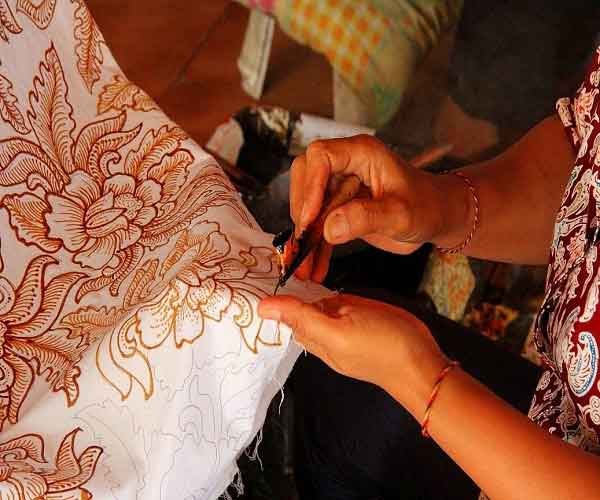
Before starting the reading, it’s better if you know what Batik is, so that the flow of this page becomes easy for readers to digest and understand. Batik is one of the typical arts belonging to Indonesia in the form of illustrated cloth with a very traditional manufacturing process and requires high accuracy by drawing cloth with certain patterns and designs using ink. The lines and curves of the colors are so dazzling. This batik has also been designated by Unesco as Masterpieces of the Oral and Intangible Heritage of Humanity which was set on 02nd October 2009, and since that day, it has also been designated as a national batik day on that date. A very beautiful cultural heritage, and to maintain and preserve this culture, the government enforces certain days where government employees wear batik when on duty, a good step in preserving cultural heritage and as a reminder for generations that Indonesia has a very rich cultural heritage. very beautiful
History of Batik Technique
Batik is one of the techniques of dyeing cloth using wax. It is an ancient form of craft that was discovered in the 4th century BC in Egypt where mummy wrapping cloth was also coated with wax or wax to form a pattern. In Asia a similar technique was also found in China during the Tang dynasty (6180907) as well as in the Inid and Japan during the Nara Period (645-794), in Africa a technique similar to batik was also known by the Yoruba tribe in Nigeria. And in Indonesia batik is believed to have been found since the Majapahit era and became very popular at the end of the XVII century or the beginning of the XIX century, batik produced during the Majapahit era was written batik until the early twentieth century and stamped batik was only known after World War 1 or around 1920. Although the word batik comes from Indonesian Java, but the presence of batik is not recorded, G.P Rouffer argues that the batik technique was probably introduced from India or Sri Lanka in the 6th and 7th centuries, but another opinion says that J.L.A Brandes and F.A Sutjipti believe that the tradition of batik technique is native to the Toraja area, Flores, Halmahera and Papua because these areas are not areas influenced by Hinduism but are known to have ancient traditions in batik making
Batik Techniques in Indonesia
The oldest batik art found in Indonesia was in the 17th and 18th centuries during the reign of the Majapahit kingdom, which at that time batik was only used by the people of the palace and their followers, over time this batik art spread outside the kingdom and become clothes that are also worn by the general public. Actually the motif of this batik is not only found on the cloth used as clothing, but the motif is also found in the reliefs of the Prambanan temple and Borobudur temple which can be concluded that batik actually already exists in Indonesia and does not originate from India, although with these findings it cannot be stated accurately the origins of batik techniques in Indonesia, whether the original Indonesian crafts in ancient times or from outsiders who introduced batik techniques in Indonesia, this is still a question mark, pending the results of research that can prove the origin of batik in Indonesia.
Types of Batik in Indonesia
As for the types – the types of batik are very diverse and are the result of creations from the development of the era – to the era that makes the types of batik become very diverse at all. All these types of batik still retain the characteristics of the painting on the cloth which is one of the characteristics of the batik with carvings with patterns and colors that used to be only black and white and now can be colored because of the development of the era that makes dyes vary, in ancient times only know only a few colors are used. A work of art that is very beautiful and is a cultural heritage that will not be lost to the times, and is still preserved by batik artisans in Indonesia, as for the types of batik are:
- Batik Tulis (Written Batik) : It is one of the earliest types of batik that existed and was used in the ancient kingdoms, which still used it manually, namely using hands and the help of canings to paint pictures on cloth. As for this type of batik, the price is quite expensive, because the manufacturing process is very unique and cannot be the same as the others due to the manual manufacturing process.
- Batik Cap (Batik Stamp): Is a type of batik whose manufacturing process uses a stamp or stamp with a certain batik motif as a substitute for canting, usually this stamp is made of copper which is carved in advance with a certain motif which will later be colored and stamped onto the fabric, so that for a manufacturing process like this it will save time and be fast in production
- Batik Printing (Batik Printing): Is a type of batik whose process is very modern, which uses a screen printing tool in its production so that it can produce many productions in a short time, usually this type of batik is sold in the market at a relatively cheap price. You can find this type of batik in clothing stores, supermarkets and markets
- Batik Kombinasi (Combination Batik): Is a type of batik that combines the technique of written batik with stamped batik with the aim of making batik to cover the shortcomings produced by stamped batik by painting the missing part with the written batik technique, this batik is more classy because the manufacturing process is quite complicated and the price of this type of batik is not much different from the price of stamped batik
Tools Making Batik in Indonesia
The tools in making batik are very diverse and the materials used are also very diverse, as for making batik it is not so complicated the most difficult thing is painting it requires very good painting skills so that the resulting patterns are similar and this skill is really the same like painting painting skills, it takes very high patience, and very focused concentration, because if something goes wrong it can’t be erased because once the ink is attached it will be permanent, if you make a mistake in painting you need to use new materials again to make from scratch. So do not be surprised if the price of this batik is very expensive. The tools and materials used in batik painting
- Lilin Malam (Wax) is a barrier material in batik art, what is meant by barrier is to prevent the color liquid from touching the mori cloth which is coated with night wax so that after it is removed the cloth remains white. Heating wax using a stove fire as a container using a small skillet
- Canting is a tool used to make written batik patterns, you could say this is the pen from batik painting, while wax is the ink, where the melted wax that is heated earlier is placed in a canting which has a wax storage tube and is used to paint batik patterns that are made of batik. wanted
- Gawangan is a tool like wood that is used to put the mori to be painted, you could say this is a tool for painting, where the cloth to be painted will be placed in the goal so it is easier to paint the desired pattern, usually made of wood or bamboo
- Canting Cap is a tool used in the batik stamp technique, which is made of copper that is formed with a certain desired pattern, there can only be one pattern in this canting stamp, where the canting cap is first engraved with the pattern to be made and one one cap pattern
- Mori cloth is a cloth used in batik-making material, this mori cloth is not like clothing cloth as usual, but a special cloth used in making batik where the mori cloth is made of cotton or better known as cotton, because This material is most suitable for batik
- Pewarna (Dye) is a dye used in giving color in batik painting, as for this dye there are two types, namely Alan dye which is made from natural natural materials such as leaves, bark, fruit tubers and fruit skins and also synthetic material made from chemicals to produce a certain color
Balinese Batik Motif
Batik as one of Indonesia’s cultural heritages that still exists today and is preserved in each region, including Bali which preserves the art of Batik, what distinguishes Balinese batik from batik from outside the region is the image on the batik, where the image of Balinese batik has its own characteristics. which is different from a picture full of curves and very beautiful, and is not limited to just lines, floral motifs, but there are also motifs such as puppets and mythical animals. This beautiful process of painting batik uses a written batik technique which is known to have a very high level of difficulty and is also very complicated in designing a pattern on the fabric before proceeding with painting. There are several Balinese batik motifs that are characteristic of it
- Singo Barong: Is a batik motif with the presence of a distinctive barong head pattern with a grin and sharp fangs, the scary appearance of the mythical creature Barong, which when painted on cloth becomes a very beautiful and very beautiful work.
- Bouquet: This is a batik motif that draws floral patterns, as the name implies, bouquetan which means a collection of flowers, while the types of flowers drawn are very diverse, from small flowers to large flowers, and most of what we see are small flowers with beautiful colors.
- Balinese dancers: This is a batik motif that is painted with pictures of very beautiful Balinese dancers on this mori cloth, with dance movements painted here, this batik is very beautiful and reflects the characteristics of the island of Bali. dancer
- Ulamsari: Is a batik motif that paints pictures of marine flora and fauna in the form of small leaves with cute stems that make the motif even more sweet and unique, wrapped in striking colors making this distinctive batik very attractive to teenagers.
- Abyor Hokokai: Is a batik motif which is an acculturation of Japanese culture that had colonized Indonesia long ago, which is also absorbed in the art of batik where the motif is a mixture of colors with a very iconic peacock ornament and combined with a painting of leaves with beautiful stalks
- Pisan bali: This is a very beautiful Balinese batik motif, this motif with very beautiful curves and Balinese batik is often used as a gift to couples who are going to travel, in the hope that the couple will return safely.